Choosing Between a Goldendoodle or a Sheepadoodle Puppy: What You Need to Know
12/1/20254 min read

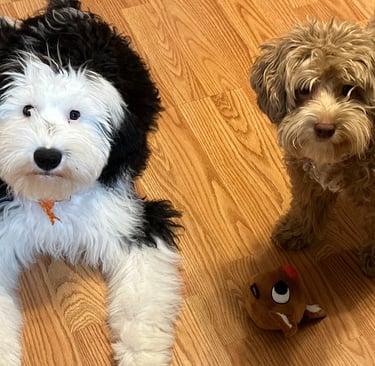
Understanding Goldendoodles: Characteristics and Traits
The Goldendoodle is a hybrid breed that emerged in the late 20th century, primarily through the crossbreeding of a Golden Retriever and a Standard Poodle. This breed was developed not only for its appealing looks but also for its hypoallergenic coat, making it a popular choice among families and individuals with allergies. Goldendoodles come in three distinct sizes, which are influenced by the type of Poodle used in the breeding process: Standard, Miniature, and Toy. Each size variation can exhibit differences in temperament and energy levels, allowing potential owners to select a Goldendoodle that best fits their living situation and lifestyle.
Physically, Goldendoodles often inherit a wavy or curly coat, which can range in color from cream to gold and even red. Their coat typically requires regular grooming to maintain its quality and prevent matting. In terms of temperament, Goldendoodles are known for their friendly, social nature, and they usually get along well with children and other pets. They are highly intelligent dogs that excel in obedience training, as their Poodle ancestry contributes significantly to their cognitive abilities. Goldendoodles are often eager to please, which enhances their trainability and makes them suitable for various roles, including therapy and service dogs.
Exploring Sheepadoodles: Unique Features and Qualities
The Sheepadoodle is an intriguing hybrid breed, resulting from the crossbreeding of the Old English Sheepdog and the Poodle. This blend of two distinct breeds contributes to a variety of appealing features that make Sheepadoodles popular among dog lovers. Originating as a designer breed intended to create a loyal and intelligent companion, Sheepadoodles have since garnered attention for their striking appearance and amiable disposition.
In terms of appearance, Sheepadoodles possess a unique aesthetic that combines the characteristics of both parent breeds. They often exhibit a fluffy, wavy coat, which can vary considerably in texture thanks to the different fur types of the Old English Sheepdog and Poodle. Sheepadoodles can come in various sizes, typically categorized by the size of the Poodle parent, including standard, miniature, and toy variants. This size diversity allows prospective owners to select a Sheepadoodle that fits their living situation and lifestyle.
Personality-wise, Sheepadoodles are known for their friendly and intelligent nature. They tend to be very social and thrive on interaction with both humans and other animals. Typically, they are affectionate and gentle, making them excellent companions for families. Furthermore, they are highly trainable due to their intelligence, which stems from their Poodle heritage. However, prospective owners should be aware that Sheepadoodles require consistent mental and physical stimulation to prevent boredom and related behavioral issues.
In terms of energy levels, Sheepadoodles may have moderate to high energy requirements, depending on their size. Daily exercise through walks, playtime, and engaging activities is crucial for maintaining their overall well-being. Like all breeds, they can be predisposed to certain health issues, including hip dysplasia and eye problems. It is vital to consult with a reputable breeder to ensure they prioritize health testing. Thus, understanding the unique qualities of Sheepadoodles can help potential owners make informed decisions regarding this charming breed.
Comparing Goldendoodles and Sheepadoodles: Which Puppy is Right for You?
When considering adding a new puppy to your family, understanding the distinctions between Goldendoodles and Sheepadoodles is crucial. Both breeds are known for their friendly temperament and hypoallergenic coats, but they exhibit notable differences in grooming needs, exercise requirements, and adaptability to family life.
Goldendoodles, a cross between Golden Retrievers and Poodles, typically possess a wavy to curly coat that requires regular grooming to prevent matting. Their grooming frequency can range from every few weeks to several months, depending on the coat type. In contrast, Sheepadoodles, a mix of Old English Sheepdogs and Poodles, often have a longer, silkier coat which also necessitates consistent grooming, but may require more frequent trips to the groomer due to their propensity for tangling. Dog owners should consider whether they have the time and financial means to maintain their chosen breed's grooming schedule.
Exercise is another important factor when comparing these two breeds. Goldendoodles tend to exhibit high energy levels and require daily walks, playtime, and mental stimulation. A family with an active lifestyle may find a Goldendoodle particularly well-suited for their needs. Conversely, Sheepadoodles, while still active, may have a slightly more laid-back demeanor; they enjoy regular exercise but can adapt to a calmer home environment, making them excellent companions for families who prefer more relaxed activities.
In terms of family compatibility, both breeds generally exhibit sociable and playful traits. Goldendoodles are often particularly friendly and outgoing, which can make them great second pets or additions to busy households. Sheepadoodles are also known for their affectionate nature, often becoming loyal and protective companions. Ultimately, prospective puppy owners should assess their lifestyle, activity level, and grooming preferences to determine whether a Goldendoodle or Sheepadoodle aligns more closely with their family's needs.
Making the Decision: Factors to Consider When Choosing a Puppy
When selecting between a Goldendoodle and a Sheepadoodle puppy, there are several essential factors that prospective dog owners must evaluate. Firstly, it is crucial to consider your living arrangements. Both breeds are known for their friendly demeanor and adapt well to various living conditions; however, space requirements may differ. Goldendoodles, bred from Golden Retrievers and Poodles, may have higher energy levels, making a yard or access to outdoor space beneficial for their exercise needs. In contrast, Sheepadoodles, stemming from Old English Sheepdogs and Poodles, may be slightly more adaptable to indoor living, as their temperament can allow them to thrive in smaller environments.
Time commitment for training and exercise is another vital consideration. Both breeds are intelligent and eager to please, making them relatively easy to train. Still, they require consistent training sessions and socialization to ensure well-rounded behavior. Assess how much time you can dedicate each day to engage in training routines and interactive play. Keep in mind that Goldendoodles often need ample exercise to expend their energy, while Sheepadoodles might require slightly less due to their calmer nature.
Financial implications also play a significant role in your decision-making process. The cost of acquiring a puppy, veterinary care, grooming, and quality food can vary between the breeds. Generally, both breeds may incur similar long-term expenses; however, Sheepadoodles often have higher grooming costs, owing to their unique coats. Consider your budget and any potential unexpected expenses that may arise throughout your puppy’s life.
Breed-specific considerations, such as potential health concerns and temperamental traits, should not be overlooked either. Research reputable breeders or rescue organizations that specialize in Goldendoodles and Sheepadoodles, as they can offer insights into the specific needs of each breed. Evaluating these factors will aid in making a thoughtful and informed choice aligned with your lifestyle and capabilities.